- Home Page
- OZ Optics Home
- Part Number Generator
- Advanced Search
- Attenuators
- Bulkhead Receptacles/Sleeve Through Adapters
- Collimators
- Connectors/Ferrules
- Fiber Diameter Gauges
- Fibers
- Fused Couplers/Splitters
- High Power Mode Field Adapters
- High Power OZ Pen CO2 Cleaning Unit
- Laser to Fiber Couplers
- Patchcords
- PLCS Couplers/Splitters
- Test Equipment
- Laser Diode Products
- Polarization Maintaining Components
- Tapered/Lensed Fibers
- Lenses
- Accessories/Cleaning
- Bare Fiber Adapters


Fiber Optic Reflectors
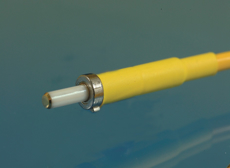
Features:
- Wide range of available wavelengths
- Available in single mode, polarization maintaining and multimode versions
- Low insertion loss
- Compact housing
- Partial reflectors available
Applications:
- Interferometric sensors
- Circulators
- Return loss testing
- Reference beam power measurements
Product Description:
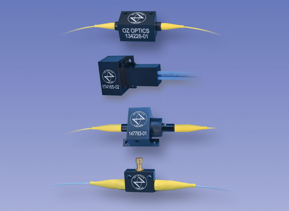
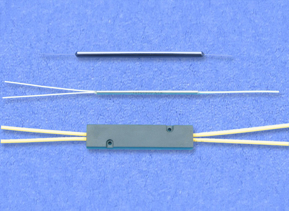
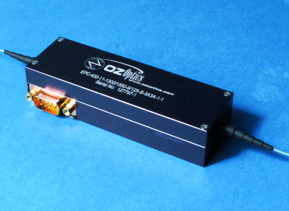
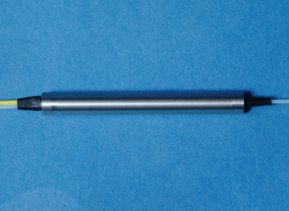
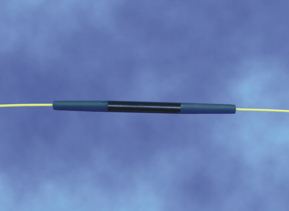
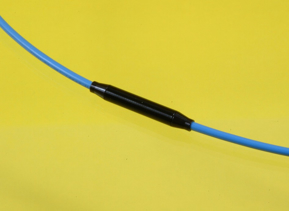
Fiber optic reflectors are used to reflect the light emerging from a fiber back in the reverse direction. They are used to build fiber interferometers, or with fiber fused splitters to measure backreflection within fiber optic components. They can also be used to measure the sensitivity of sources to backreflection from other devices, by providing reference reflection levels. This is very useful for deriving backreflection specifications for transmitters.
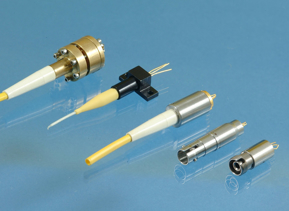
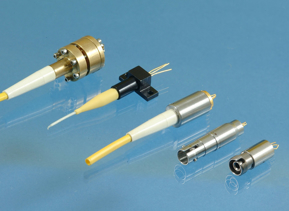
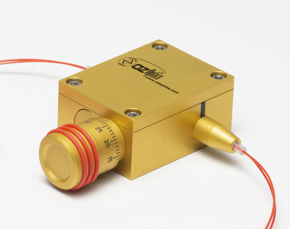
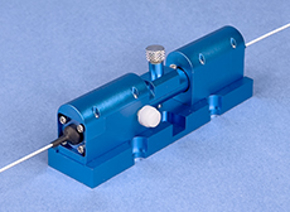
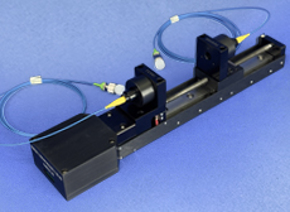
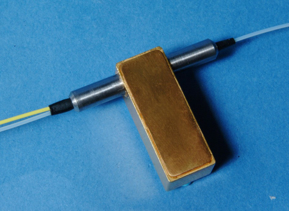
Fiber optic reflectors consist of a fiber optic collimator and a mirror. The fiber output is first collimated, then it strikes the mirror and is reflected back into the collimator. The angle between the collimator and the mirror is adjusted using OZ Optics Optics' patented tilt adjustment technique, until as much light as possible is reflected back into the fiber. Using this technique, reflectors with typical losses of only 0.6 dB can be constructed. Avariable reflector is avail able that includes a blocking screw, to obtain variable reflection levels. This is achieved by partially blocking the collimated beam between the lens and the mirror.
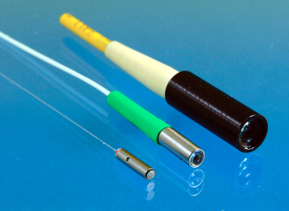
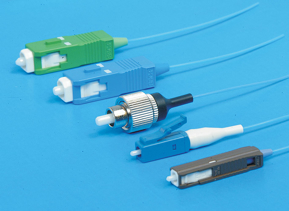
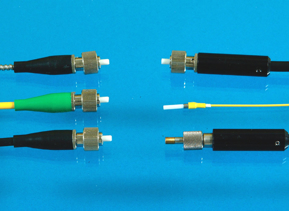
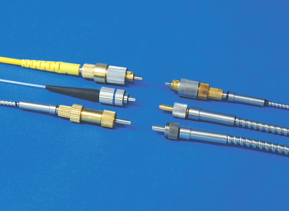
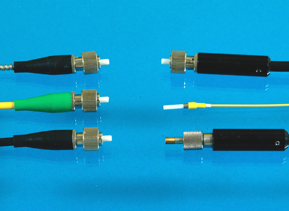
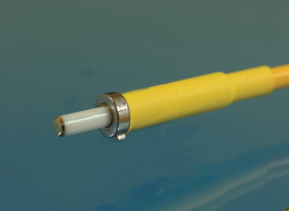
Both connector receptacle style and pigtail style reflectors are available. Connector receptacle style reflectors come with a female connector recepta cle to allow the fibers to be easily changed.
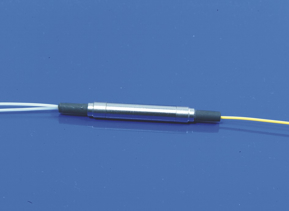
Pigtail style reflectors come with a fiber of your choice permanently attached to the collimating lens. This type of reflector is recommended for optimum cou pling efficiency and stability. The other end of the fiber can be terminated with your choice of connector.
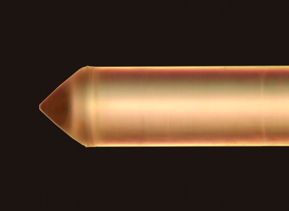
OZ Optics also sells fibers with coated ends. Gold coatings are used to pro vide excellent broadband reflection for infrared wavelengths. Other coating materials are available for other wavelengths. The ends can have total reflect ing, or partial reflecting/partial transmitting coatings. Contact OZ Optics for fur ther information.
Reflectors are available for wavelengths from 400 nm to 1600 nm. Reflectors that operate at both 1300 and 1550 nm are available, with only a slight differ ence in insertion losses at both wavelengths. Broadband reflectors using achromatic lenses to collimate light at different wavelengths are available. Partially reflecting mirrors are also available, to partly transmit the light. The transmitted light can be coupled into an output fiber as an option, thus forming an in-line reflector. Contact OZ Optics for further details. Laser diodes or lasers with long coherence lengths can cause etalon effects in fiber optic reflectors.


FORF-31P-1550-8/125-P-3A-3-1

FORF-31P-1300/1550-9/125-S-3S-3-1

FORF-31P-1550-8/125-P-3S-3-1


FORF-31P-1060-6/125-S-3A-1-1

FORF-31P-IRVIS-50/125-M-3A-3-1

FORF-31P-IRVIS-50/125-M-3S-3-1
Fiber Optic Reflectors
Filter by:
Clear All